Happy Halloween in 20 Languages
TABLE OF CONTENTS
Halloween crossed oceans with its English name still attached. In most languages you will hear a local word for “happy” or “good” plus the borrowed word Halloween — and a few places keep an older night of their own.
Happy Halloween in 20 Languages
Capital letters mark the stressed part of each rough pronunciation. These English-style guides cannot show tones, vowel length, or every regional accent, so treat them as a starting point.
Halloween is widely celebrated on 31 October. In many countries the greeting is a calque or a direct loan: speakers keep Halloween and add their usual holiday adjective. Irish is a notable exception — the night is still named for Samhain.
| Language | Phrase (native) | Romanization / rough pronunciation | Useful note |
|---|---|---|---|
| Spanish | ¡Feliz Halloween! | feh-LEES HA-loh-ween | Also ¡Feliz Noche de Brujas! (“Happy Night of Witches”); both are understood |
| French | Joyeux Halloween ! | zhwah-YUH a-lo-ween | Halloween is feminine in French; the h is aspirated and usually silent for liaison |
| German | Fröhliches Halloween! | FRUR-likh-es HA-loh-veen | Frohes Halloween! is a shorter everyday option |
| Italian | Buon Halloween! | bwon HA-loh-ween | A clear party greeting; All Saints’ Day the next morning is Ognissanti |
| Portuguese | Feliz Halloween! | feh-LEES ha-lo-WEEN | Feliz Dia das Bruxas! uses the local name “Day of the Witches” |
| Dutch | Gelukkig Halloween | khuh-LUK-ikh ha-loh-VEEN | A straightforward calque; English Happy Halloween also appears on cards |
| Swedish | Glad Halloween | glahd HA-loh-ween | Short and common on social posts and party invites |
| Polish | Wesołego Halloween | veh-SO-weh-go ha-loh-EEN | Szczęśliwego Halloween is another frequent written form |
| Russian | Счастливого Хэллоуина! | Schastlivogo Khellouina — shchas-LEE-vuh-vuh kheh-loh-EE-nah | Genitive greeting pattern, like other holiday wishes |
| Greek | Καλό Χαλοουίν! | Kaló Chaloouín — kah-LOH ha-loh-WEEN | Uses the borrowed holiday name with καλό (“good”) |
| Turkish | Cadılar Bayramınız Kutlu Olsun | jah-duh-LAR buy-rah-muh-NUHZ koot-LOO ol-soon | Uses Turkey’s name for the day, Cadılar Bayramı (“Witches’ Festival”) |
| Arabic | هالوين سعيد | Halloween saʿīd — ha-loo-WEEN sa-EED | Modern written form; everyday dialects may keep the English phrase |
| Hindi | हैलोवीन की शुभकामनाएँ | hailovīn kī śubhkāmnāẽ — hai-lo-VEEN kee shoobh-KAA-mnaa-en | Wiktionary also lists the shorter हैलोवीन की शुभकामना |
| Mandarin Chinese | 万圣节快乐 | Wànshèngjié kuàilè — wahn-shung-jyeh kwai-luh | 万圣节 originally meant All Saints’ Day and is now used for Halloween |
| Japanese | ハッピーハロウィン | happī harowīn — hap-PEE ha-ro-ween | Katakana loan of the English greeting; widely used on posters and social media |
| Korean | 해피 할로윈 | haepi hallowin — hae-pee ha-lo-win | Hangul spelling of the English phrase; common in shops and K-culture events |
| Thai | สุขสันต์วันฮาโลวีน | sùk-sǎn wan haa-loo-wiin — sook-san wan ha-lo-ween | Same สุขสันต์ pattern used for other holiday wishes |
| Vietnamese | Chúc mừng Halloween! | chook moong HA-loh-ween | Halloween vui vẻ! is another short option; English Happy Halloween is also common |
| Indonesian | Selamat Halloween | suh-LAH-mat HA-loh-ween | Follows the Selamat… greeting pattern used for many holidays |
| Irish | Oíche Shamhna shona duit | EE-hyeh HOW-nuh HUN-uh ditch | Literally “happy Samhain night to you”; use daoibh for more than one person |
The table gives one useful default per language. It does not cover every dialect, emoji-heavy social caption, or English-only party invite.
Borrowed Name vs Local Greeting
Halloween is a relatively recent import in many places. That shows up in the wording.
Most languages keep the English name
Spanish, French, German, Italian, Dutch, Swedish, Polish, Japanese, Korean, Indonesian, and several others typically keep Halloween and attach a local “happy / good / merry” word. The holiday traveled with its label.
A few languages use a local festival name
- Irish keeps Oíche Shamhna, “Samhain night,” which is older than the American Halloween package of pumpkins and candy.
- Turkish often uses Cadılar Bayramı.
- Portuguese speakers may prefer Dia das Bruxas.
- Mandarin uses 万圣节, a name that historically pointed to All Saints’ Day and now commonly labels Halloween celebrations.
Halloween is not Día de Muertos
Mexico’s Día de Muertos (Day of the Dead) falls on 1–2 November and centers on remembering relatives who have died. It shares a calendar neighborhood with Halloween and some imagery, but it is a different festival with a different purpose. For October holidays side by side, see October festivals around the world.
Cards, Costumes, and “Trick or Treat”
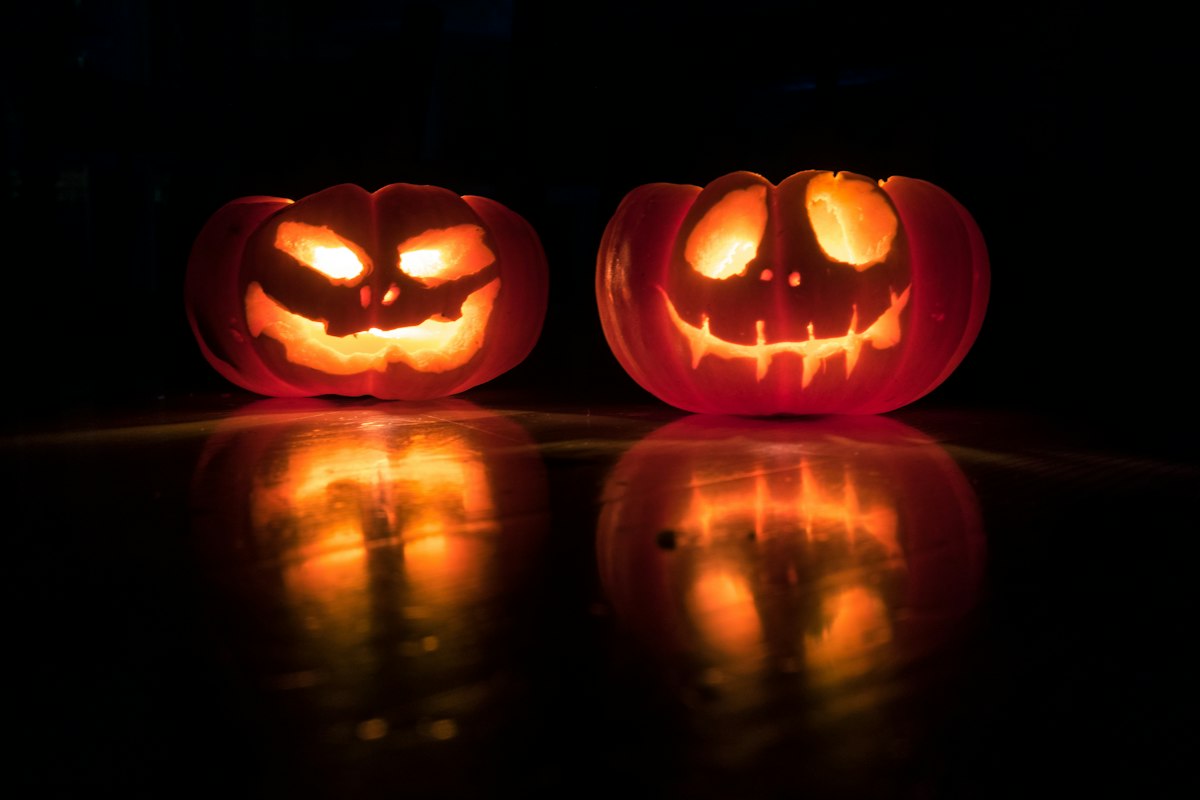
A greeting on a card is only half the Halloween vocabulary. Door-to-door candy has its own local rhymes:
| Language | “Trick or treat” | Literal sense |
|---|---|---|
| Spanish | truco o trato | trick or deal |
| French | des bonbons ou un sort | sweets or a spell |
| German | Süßes oder Saures | something sweet or something sour |
| Italian | dolcetto o scherzetto | a little sweet or a little joke |
| Portuguese | doces ou travessuras / gostosuras ou travessuras | sweets/treats or mischief |
| Mandarin | 不给糖就捣蛋 | no candy, then mischief |
| Swedish | bus eller godis | prank or candy |
| Irish | cleas nó cóir | trick or treat/fair share |
When you write a card, name the occasion and keep the tone light. A single borrowed phrase is fine for a costume party; a full sentence is better for a school note or workplace message. For more holiday wording patterns, browse holiday translation fun.
Which Greeting Should You Use?
| Situation | Best approach |
|---|---|
| Costume party or social media post | Use the short phrase from the main table |
| Card to one Irish speaker | Oíche Shamhna shona duit; use daoibh for a group |
| Message across several Spanish-speaking countries | ¡Feliz Halloween! is widely understood |
| Formal workplace note | Add a full sentence in the reader’s language, not only the two-word greeting |
| Distinguishing from Day of the Dead | Do not treat Halloween and Día de Muertos as interchangeable |
If you are drafting a longer multilingual message, OpenL can help you check the full sentence — then re-read names, dates, and tone before you send it.
FAQ
Do most languages invent a brand-new Halloween greeting?
Usually not. Many keep the English word Halloween and add a local adjective for “happy” or “good.” That is why Joyeux Halloween, Buon Halloween, and ハッピーハロウィン look so similar under the surface.
Is Feliz Día de las Brujas the same as Feliz Halloween?
Both wish someone a happy Halloween in Spanish. Noche de Brujas / Día de las Brujas is a descriptive local name; Halloween is the borrowed label. Either works in most casual contexts.
Are the pronunciation guides exact?
No. They are rough cues for English speakers. Mandarin tones, Irish slender consonants, Arabic emphatics, and several other sounds need native audio or IPA for accuracy.
How is this different from other multilingual greetings?
The pattern matches guides such as thank you in different languages and congratulations in 20 languages: one safe default, a pronunciation hint, and a note on formality or local alternatives. Halloween simply borrows more often than older greetings do.
Sources
- Wiktionary: happy Halloween — holiday-greeting entry with Mandarin and Hindi translations.
- Wiktionary: Halloween — etymology and multilingual names for 31 October (including Irish Oíche Shamhna, Turkish Cadılar Bayramı, Mandarin 万圣节).
- Wiktionary: Oíche Shamhna — Irish name for Halloween / Samhain night.
- Wiktionary: trick or treat — cross-language candy-request translations used in the secondary table.
- Verbavia: Happy Halloween in other languages — comparative Romance/Germanic greetings, trick-or-treat calques, and Día de Muertos contrast (updated Oct 2026).
- Bitesize Irish: Oíche Shamhna phrases — Irish greeting forms duit / daoibh and pronunciation notes.